Mishi has always been a bit more prone to eye irritation than Bruno, something I first noticed years ago when I saw a bit of crusty discharge in the corner of her eye one morning. My first instinct was to just wipe it away and move on, which honestly worked fine that time — but it also got me curious enough to learn what’s normal, what’s not, and when eye issues need more than a quick wipe with a damp cloth.
A small amount of clear or slightly tinted discharge in the corners of a dog’s eyes, especially first thing in the morning, is generally normal and not a cause for concern. This is similar to the “sleep” humans sometimes get in their eyes overnight — a natural buildup of debris, oil, and mucus the eye produces as part of normal function. Generally normal: small amounts of clear or slightly tinted discharge, especially in the morning; discharge that wipes away easily and doesn’t recur heavily throughout the day; no accompanying redness, swelling, or signs of discomfort; and a dog showing no pain when the area around the eye is gently touched. (I’m an experienced owner, not a vet — eye issues range from harmless to genuinely urgent, so treat this as patterns worth noticing, not a substitute for an actual exam.)
Reading the Color and Pattern, Not Just the Presence
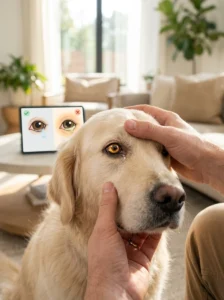
This is where I’ve learned to pay closer attention, since color, consistency, and accompanying symptoms tell a much more useful story than the discharge alone.
Watery discharge (excessive tearing) can indicate irritation from dust, an eyelash rubbing the wrong way, allergies, or a blocked tear duct. This was actually Mishi’s most common pattern — mild excessive tearing, especially during dustier or higher-pollen times of year.
Thick, colored discharge (yellow, green, or notably cloudy) often points toward an infection, whether bacterial or related to an underlying issue like conjunctivitis, and typically warrants a vet visit rather than just at-home cleaning.
Discharge combined with redness in the white of the eye or surrounding tissue can indicate irritation, infection, or in some cases a more significant issue like an injury or foreign object.
Discharge combined with squinting or visible discomfort is a stronger signal that something is actively bothering your dog’s eye, ranging from minor irritation to something requiring prompt treatment.
What’s Usually Behind It
Allergies. Environmental allergens can cause eye irritation alongside other symptoms like skin itching or ear infections. Our guide to dog allergies covers this connection.
Conjunctivitis. Inflammation of the membrane covering the eye, caused by allergies, irritants, or infection, often resulting in redness alongside discharge.
Foreign objects. Dust, grass seeds, or debris caught in the eye, a common cause of sudden discharge and discomfort, especially after time spent outdoors in grassy or dusty areas.
Blocked tear ducts. Some dogs, particularly certain breeds with facial structures that affect tear drainage, are more prone to excessive tearing.
Dry eye (keratoconjunctivitis sicca). A condition where a dog doesn’t produce enough tears, which can ironically sometimes cause increased mucus-like discharge as the eye tries to compensate, alongside redness and discomfort.
Corneal injuries or scratches, from rough play, contact with rough vegetation, or other minor accidents, often causing sudden squinting and visible discomfort.
Breed-specific predisposition. Breeds with prominent eyes or facial folds near the eyes are often more prone to irritation simply due to their anatomy.
Breeds More Prone to This

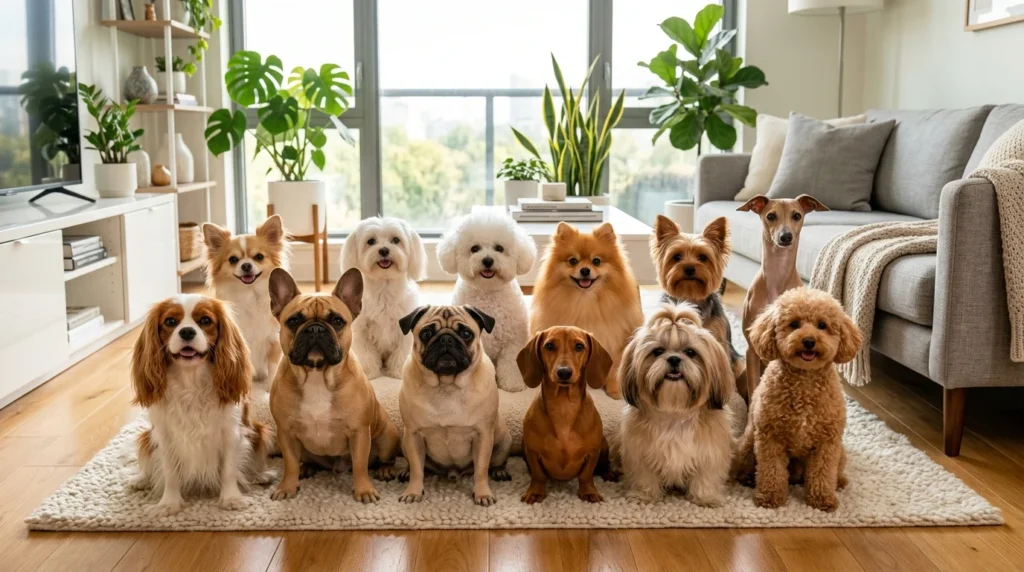
Some breeds are simply more predisposed due to facial structure or genetics. Breeds with prominent, protruding eyes often have less natural protection and are more prone to irritation and injury. Breeds with facial folds near the eyes can have skin or fur that rubs against the eye, causing chronic mild irritation. Breeds with naturally heavier tear production or particular eyelid shapes may also be more prone to staining and discharge regardless of any underlying health issue. If you have a breed known for these predispositions, it’s worth asking your vet specifically what’s considered normal for that breed, since “normal” genuinely looks different without these anatomical factors.
Tear Staining: Mostly Cosmetic, Worth Understanding Anyway
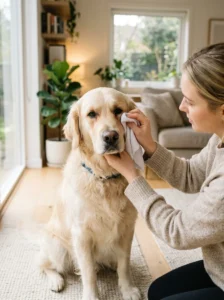
Many owners notice reddish-brown staining beneath a dog’s eyes, particularly in lighter-coated dogs where it’s more visually obvious. This is primarily caused by a compound in tears that oxidizes and discolors fur over time with prolonged exposure — largely a cosmetic issue rather than necessarily indicating a health problem, though excessive tearing that causes significant staining is still worth understanding the cause of. For dogs prone to this, regular gentle cleaning, keeping fur trimmed short around the eyes if applicable, and addressing any underlying cause of excessive tearing can help reduce staining, even though it may never disappear completely for some dogs given their individual tear composition and coat color.
What I Actually Do at Home for Mild Cases
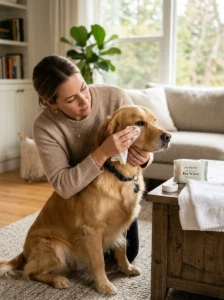
For the kind of mild, occasional discharge Mishi sometimes gets: gently wipe the area with a clean, damp cloth or vet-approved eye wipe, working from the inner corner outward, using a clean section for each eye to avoid cross-contamination. Watch for recurrence and pattern — is it daily? Tied to specific times of year or activities? Check for an obvious cause like visible debris, without attempting to remove anything embedded in the eye itself, which is a job for your vet. And monitor for additional symptoms like redness, squinting, or behavior changes.
I’ve learned that with Mishi, mild watery discharge during high-pollen periods is fairly predictable and resolves with basic wiping and no other intervention. But I also know that any change in pattern — thicker discharge, visible redness, or her pawing at her eye — is my cue to stop managing it at home and call our vet instead.
A few things I’ve learned not to do: don’t use human eye drops without your vet’s specific approval, since many aren’t formulated safely for canine eyes. Don’t attempt to remove anything embedded in the eye yourself — this requires proper tools and technique. Don’t ignore persistent or worsening discharge, assuming it will resolve indefinitely. And don’t use the same cloth on both eyes if you suspect one has an active infection, to avoid spreading it.
Eye Discharge Across Different Ages

It’s worth noting that discharge can mean different things depending on age. In very young puppies, particularly before their eyes have fully opened and adjusted, mild discharge can sometimes relate to normal developmental processes, though anything beyond very mild discharge in a young puppy is still worth a vet check given how much else can go wrong during this vulnerable stage. In adult and senior dogs, sudden new discharge after a long period of normal eyes is generally more likely to indicate a specific new cause — allergy, injury, infection — rather than anything developmental, which is part of why a sudden change in an older dog tends to warrant prompt attention.
Protecting Eyes During Outdoor Activities
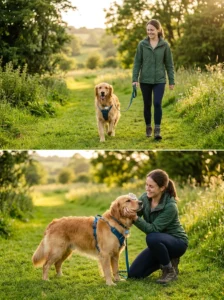
For dogs that spend significant time outdoors, particularly in dusty conditions, riding with their head out the window, or playing in tall grass, proactive protection reduces how often irritation comes up. This includes discouraging head-out-the-window car rides (which exposes eyes directly to wind, dust, and debris at speed), being mindful of walking routes during dusty or windy conditions, and doing a quick visual check after any outdoor activity in brushy areas.
When Eye Issues Are Part of a Bigger Allergy Picture
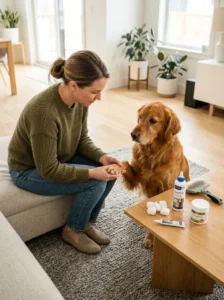
For dogs like Mishi who deal with broader environmental allergy patterns, eye irritation is often just one piece of a larger seasonal puzzle that also includes ear issues and occasional skin sensitivity. Rather than treating each symptom in isolation, our vet has encouraged us to think about her overall allergy management as a single ongoing strategy — addressing the broader environmental triggers tends to reduce eye-related flare-ups alongside everything else, rather than chasing each symptom separately every time it appears.
I’ve also started incorporating a quick visual eye check into the same routine where I check ears and run my hands over the body for any unusual lumps or sensitivity, treating it as part of an integrated overall wellness habit rather than a separate task I’m likely to forget. This kind of combined, consistent check has made me much more likely to notice subtle changes early across multiple areas at once.
When to Actually Call the Vet

Some situations call for prompt veterinary attention rather than at-home management: thick, colored discharge; significant redness in the white of the eye; visible squinting, pawing at the eye, or clear signs of pain; cloudiness or a visible change in the eye’s appearance; discharge from only one eye that seems disproportionate or sudden; any suspected foreign object or injury; or discharge that doesn’t improve despite a few days of gentle at-home cleaning. Eye issues, in general, are one of those areas where it’s better to err on the side of getting it checked rather than waiting, since the eye is a sensitive structure where problems can sometimes progress quickly.
A few quick answers: a little morning discharge is generally normal if it’s small, clear or slightly tinted, and wipes away easily. Yes, allergies commonly cause red, watery eyes in dogs, similar to people. Discharge isolated to one eye is more likely to indicate something localized, like a foreign object or infection specific to that eye, and is worth checking. And some vet-approved saline washes are appropriate, but confirm the specific product with your vet rather than assuming any saline solution is safe.
Learning to actually pay attention to Mishi’s eye discharge, rather than just wiping it away without a second thought, has made me much more confident distinguishing normal, minor irritation from something that needs a vet’s attention.
For more on related symptoms worth watching, our guides on dog allergies and signs your dog is in pain are worth reading next.