One of the first questions I had as a new dog owner was embarrassingly basic: can Bruno actually eat the leftover rice on my plate? The vegetables I was chopping? A piece of the chicken I was cooking? I quickly realized there wasn’t one simple answer — some human foods are perfectly fine, some need preparation adjustments, and some are genuinely dangerous, sometimes in ways that aren’t intuitive at all.
Dogs process certain foods very differently than humans do. Some foods that are completely harmless to us can cause anything from mild stomach upset to life-threatening reactions in dogs, often because of how their metabolism and digestive system differs from ours. On the flip side, plenty of human foods are genuinely fine, and some can even be a healthy addition in moderation. The trouble is that misinformation spreads easily on this topic — I’ve seen confident, contradictory claims about the same food across different sources. This list reflects current, widely supported veterinary guidance — though I’m an experienced dog owner, not a veterinarian or veterinary nutritionist, so when in doubt about a specific food, a quick call to your vet is always the safer choice, especially if your dog has a specific health condition or allergy.
Foods Dogs Can Eat Safely (in Moderation)
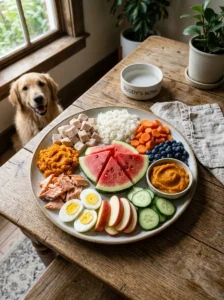
Plain cooked chicken (no skin, no seasoning, no bones) — a common, easily digestible protein, often used in bland diets for upset stomachs.
Plain white rice — gentle on the stomach, commonly paired with chicken for a bland diet during digestive upset.
Carrots — a popular low-calorie crunchy treat, raw or cooked, that many dogs genuinely enjoy.
Plain cooked sweet potato — a good source of fiber, though should be given in moderation and never raw.
Plain scrambled or boiled eggs — a good protein source, fully cooked, without added butter, oil, or seasoning.
Plain cooked fish — salmon and similar fish, fully cooked and boneless, offer omega-3 benefits; raw fish carries a parasite risk worth avoiding.
Blueberries — a popular antioxidant-rich treat in small amounts.
Watermelon — the pink flesh (without rind or seeds) is safe and often refreshing in hot weather; our full guide to watermelon and fruits covers more detail.
Plain cooked pumpkin — supports digestive health, commonly recommended by vets for mild stomach upset.
Cucumbers — a low-calorie, hydrating snack that many dogs enjoy.
Apples — in small amounts, without seeds or core, which contain compounds that convert to cyanide in significant quantities.
Plain peanut butter — a popular treat, but specifically without xylitol, which is toxic. Our full guide to peanut butter for dogs covers this in more detail.
Foods That Are Dangerous or Toxic
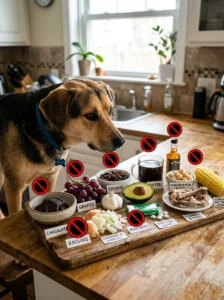
Chocolate — contains theobromine, which dogs metabolize far more slowly than humans, with darker chocolate and larger amounts being significantly more dangerous. A small amount may cause digestive upset; larger amounts can be life-threatening.
Grapes and raisins — even small amounts have caused acute kidney failure in some dogs, with the toxic compound still not fully understood, making any amount a serious concern. Our full guide to grapes and raisins covers this in detail.
Xylitol — an artificial sweetener found in gum, some peanut butters, candy, and other products; causes a rapid, dangerous drop in blood sugar and can cause liver failure in dogs.
Onions, garlic, leeks, and chives — in any form, including cooked, powdered, or raw; damage red blood cells and can cause anemia, with cumulative effects making repeated small exposures as concerning as a single large exposure.
Macadamia nuts — cause tremors, weakness, vomiting, and other neurological symptoms, even in small amounts.
Avocado — contains persin, which can cause digestive upset, with the pit also posing a serious choking and obstruction risk.
Alcohol — even small amounts affect dogs significantly more than humans given size differences; never intentional exposure.
Cooked bones — can splinter dangerously; our chicken bones guide covers the bone question specifically.
Corn on the cob — the cob itself poses a serious intestinal obstruction risk.
Nutmeg — toxic to dogs in more than trace amounts.
Raw yeast dough — expands in the stomach and produces alcohol during fermentation, both dangerous.
Caffeine — coffee, tea, energy drinks; affects the nervous system significantly more than in humans.
Foods That Affect Dogs Differently Than You’d Expect
A few foods deserve special mention because their risk isn’t always obvious or intuitive.
Mushrooms — wild mushrooms vary enormously in toxicity, and since most owners can’t reliably distinguish safe from dangerous varieties, it’s safest to keep your dog away from any wild mushrooms entirely, whether on a walk or in your own yard. Plain, store-bought mushrooms (like button or cremini) are generally considered safe in small amounts, but the distinction matters enormously.
Raw bread dough specifically (as opposed to baked bread, which is generally fine in small amounts) deserves its own mention beyond the toxic foods list, since it’s a food people don’t always think to keep away from dogs, given how harmless baked bread itself is.
Coconut and coconut oil — generally considered safe in small amounts and sometimes added to diets for potential skin and coat benefits, though large amounts can cause digestive upset, and it’s worth checking with your vet before adding it regularly given the ongoing debate about its actual nutritional benefits for dogs.
Honey — generally safe in small amounts for adult dogs, though raw honey carries a small botulism risk for very young puppies with still-developing immune systems.
Building a Household Habit of Caution

A few practical habits that have made a genuine difference for us:
⦁ Educating everyone in the household, including guests when relevant, about what’s off-limits, since a well-meaning visitor sharing a grape or piece of chocolate is a genuinely common way dogs get into trouble
⦁ Keeping dangerous foods stored securely, not just out of immediate reach, since a determined or food-motivated dog can be more resourceful than you’d expect
⦁ Being especially careful around holidays, when chocolate, grapes, onions, and other risky foods are often more accessible than usual
⦁ Double-checking ingredient labels on packaged foods before sharing, since xylitol and other risky ingredients can show up in unexpected products
Reading Ingredient Lists When Sharing Human Food
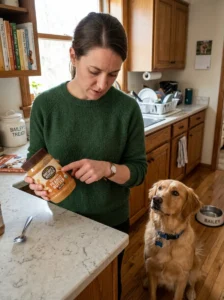
Beyond knowing individual foods, building the habit of actually reading ingredient lists on packaged human food before sharing any of it matters enormously. A seemingly innocent snack can contain onion powder, garlic powder, or xylitol without it being obvious from the product’s main description or flavor name. This habit has become second nature for me now, but it took a conscious effort to build initially, since it’s not something most people think to do before sharing a bite of something with their dog.
Building Your Own Quick-Reference System

Beyond memorizing this list, I’d genuinely recommend creating your own accessible reference — whether that’s a printed list on the fridge, a saved note on your phone, or simply bookmarking a reliable resource. In a moment of uncertainty about whether something is safe, having quick access to clear information matters more than trying to recall everything from memory under any time pressure.
How Two Very Different Dogs Changed My Approach

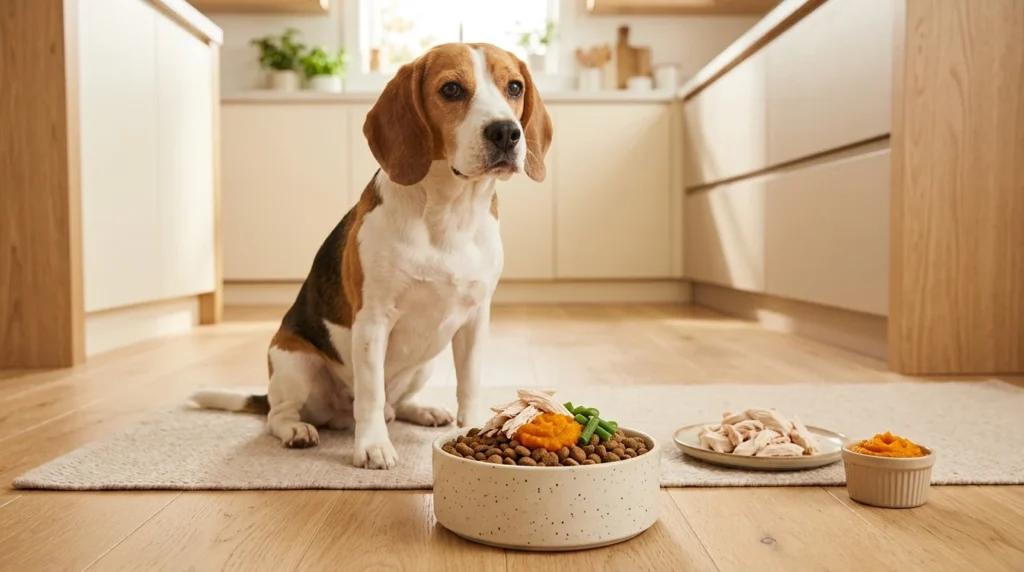
Having both Bruno and Mishi has genuinely shaped how I think about this topic, since their digestive systems respond quite differently. Bruno is fairly robust and rarely has issues with occasional safe-food additions. Mishi has a notably more sensitive stomach and tends to show more noticeable reactions — even to foods technically on the “safe” list — if given in larger amounts or too frequently. This individual variation is worth keeping in mind: “safe” means safe for most dogs in reasonable amounts, not necessarily that every dog handles every safe food identically well. Watching your specific dog’s response to any new food, even one from the safe list, matters as much as the general guidance itself.
Preparing Safe Foods Correctly

Several foods on the safe list come with important preparation notes that make a real difference: chicken should always be cooked and unseasoned (not pulled from a heavily spiced dish), eggs should be fully cooked (raw egg whites contain avidin, which interferes with biotin absorption with prolonged exposure), fruit should be served without seeds or rinds where applicable, and vegetables should generally be served plain without the butter, oil, salt, or sauce that would typically accompany them in a human meal. The food itself might be safe; how it was prepared for your table might not be.
What to Do If Your Dog Eats Something Dangerous

Keep your vet’s number easily accessible, alongside the ASPCA Animal Poison Control Center or a similar resource in your region. If your dog eats something potentially toxic, contact one of these rather than guessing at the risk yourself — the appropriate response differs significantly depending on what was ingested, the amount, and your dog’s size, and some situations require prompt intervention while others can be monitored safely at home.
A few specific questions that come up often: occasional plain, unseasoned scraps from the safe list are generally fine in small amounts, while heavily seasoned or sauce-covered table food is best avoided. If your dog ate a small piece of chocolate, contact your vet or a poison control hotline with specifics (the type of chocolate, the amount, and your dog’s weight) rather than guessing at the risk — darker chocolate and larger amounts relative to body weight are significantly more concerning. And even safe foods should make up a small portion of your dog’s overall diet — treats and extras are generally recommended to stay under about 10% of total daily calories.
Learning this list properly, rather than relying on guesswork or scattered advice, has made mealtimes and kitchen moments with Bruno and Mishi feel a lot less anxiety-inducing. If you only take one thing from this guide, let it be this: when you’re not sure about a specific food, it’s always worth a quick search or a call to your vet rather than assuming it’s probably fine.
For more on specific foods and feeding practices, our guides on the 10 foods dogs should never eat and how much to feed your dog are excellent next reads.