
I’ll be upfront about something important before diving into recipes: homemade dog food, done casually or occasionally, is very different from homemade food meant to be a dog’s complete, sole diet long-term. I learned this distinction the hard way after initially assuming that “real food” was automatically healthier than commercial dog food, without understanding the actual nutritional complexity involved in feeding a dog a fully balanced diet from scratch.
This guide covers what I’ve learned about homemade dog food done thoughtfully — both occasional recipes that are genuinely safe and useful, and what it actually takes if you’re considering homemade food as a primary diet.
(Worth noting upfront: I’m an experienced dog owner, not a veterinary nutritionist. Recipes here are meant as occasional additions or treats, not a complete diet replacement, unless developed and balanced with guidance from a veterinary nutritionist specifically. Always check with your vet before making significant changes to your dog’s diet, especially if they have any health conditions.)
Why Complete Nutritional Balance Matters
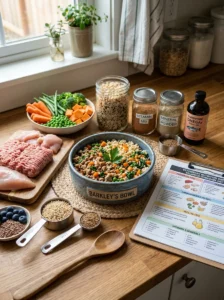
This was the biggest gap in my own early understanding. Dogs need a specific, fairly complex balance of protein, fat, carbohydrates, vitamins, and minerals — not just “real, whole food” in a general sense. Commercial dog foods that meet established nutritional standards are formulated specifically to provide this complete balance. Homemade meals, unless carefully formulated (often with guidance from a veterinary nutritionist) to meet the same standards, can fall short in ways that aren’t obvious in the short term but can cause real health problems over months or years of an imbalanced diet.
This doesn’t mean homemade food is inherently bad — it means casual homemade meals work well as occasional additions or treats, while a homemade diet intended as a dog’s primary, long-term food needs genuine nutritional planning, not just good intentions and quality ingredients.
Simple, Safe Recipes for Occasional Use
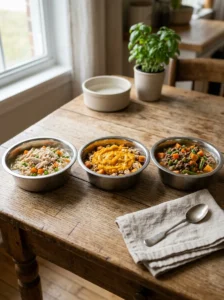
These recipes are designed as occasional additions, treats, or temporary bland-diet support — not a full dietary replacement.
### Basic Chicken and Rice (Bland Diet Support)
This is the classic combination often recommended by vets for dogs recovering from digestive upset.
Ingredients:
⦁ Boneless, skinless chicken breast
⦁ Plain white rice
⦁ Water for boiling
Method: Boil chicken thoroughly until fully cooked (no pink, no seasoning, no oil), then shred or chop into small pieces. Cook plain white rice separately. Combine in a roughly 1:2 ratio of chicken to rice. Serve in small portions, cooled to room temperature.
This isn’t meant to be a long-term diet, but it’s a genuinely useful option to have ready when your vet recommends a bland diet, such as after a bout of vomiting or diarrhea.
### Pumpkin and Sweet Potato Mash
Ingredients:
⦁ Plain canned pumpkin (not pie filling) or fresh pumpkin, cooked and pureed
⦁ Sweet potato, cooked and mashed (no skin, no seasoning)
Method: Combine in roughly equal parts, mash together until smooth. This makes a good occasional topper for regular meals, and many dogs find it genuinely appealing as a treat on its own in small amounts.
### Simple Beef and Vegetable Mix
Ingredients:
⦁ Lean ground beef, fully cooked, drained of excess fat
⦁ Plain cooked carrots, chopped small
⦁ Plain cooked green beans, chopped small
Method: Cook beef thoroughly, drain any excess fat (which can contribute to digestive upset or pancreatitis risk if too rich). Combine with cooked, chopped vegetables. Serve as an occasional topper or treat, not a full meal replacement.
From my experience: I make a version of the chicken and rice recipe whenever Bruno or Mishi has a mild stomach upset, since it’s simple, gentle, and something I always have ingredients on hand for. It’s become a genuinely useful tool in our household beyond just being a “nice extra.”
If You’re Considering Homemade Food as a Primary Diet

This is a bigger commitment than occasional recipes, and deserves a more careful approach.
Work with a veterinary nutritionist, not just a general recipe found online, to ensure the diet is actually complete and balanced for your specific dog’s needs, life stage, and any health considerations. This isn’t a step to skip even if a recipe looks thorough and well-researched.
Understand that “homemade” doesn’t automatically mean “healthier.” A poorly balanced homemade diet can cause genuine nutritional deficiencies over time, sometimes with serious health consequences, despite good intentions and quality ingredients.
Expect ongoing commitment, not a one-time recipe to follow indefinitely. Nutritional needs can shift with your dog’s age, health status, and activity level, meaning a homemade diet plan often needs periodic reassessment, similar to how commercial food recommendations might change over a dog’s life.
Consider the time and cost involved. Preparing balanced homemade meals consistently takes real time and often costs more than commercial options of similar quality, which is worth factoring into your decision honestly.
Common Homemade Diet Mistakes to Avoid
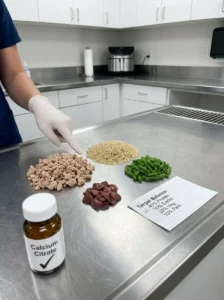
Assuming “the same proportions every meal” is automatically balanced. Nutritional balance, especially for calcium, phosphorus, and certain vitamins, requires more precision than eyeballing proportions of meat and vegetables.
Forgetting calcium specifically. This is one of the most common gaps in DIY homemade diets — without bone meal, a calcium supplement, or another appropriate source, a homemade diet can become significantly calcium-deficient over time, which affects bone health.
Using too much organ meat or too little. Organ meat provides important nutrients but in excess can cause issues like vitamin A toxicity, while too little misses out on nutrients not well provided by muscle meat alone.
Not accounting for individual needs. A growing puppy, a senior dog, and a dog with a health condition all have different nutritional requirements that a generic recipe doesn’t account for.
Ingredients to Avoid Even in Homemade Cooking
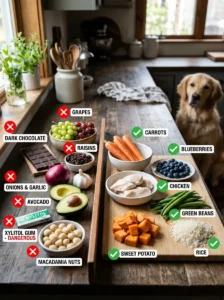
Everything covered in our complete safe and unsafe foods guide still applies when cooking at home — onions, garlic, grapes, and other toxic ingredients are just as dangerous in a homemade recipe as anywhere else. It’s worth double-checking every ingredient against that list before incorporating it into anything you’re preparing.
Transitioning to or Incorporating Homemade Food

If you’re adding homemade meals or toppers to your dog’s existing diet, doing so gradually helps avoid digestive upset, similar to any other dietary change. Our guide to switching dog food without stomach upset covers the general principles, which apply here too — start with small amounts mixed into regular meals, gradually increasing if your dog tolerates it well.
Storage and Food Safety Considerations
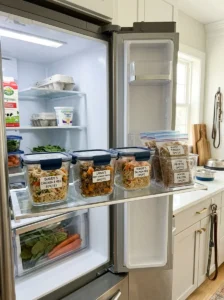
Homemade dog food needs the same food safety attention as anything you’d cook for yourself:
⦁ Refrigerate promptly, generally within a couple of hours of cooking
⦁ Use refrigerated portions within a few days, or freeze for longer storage
⦁ Thaw frozen portions safely (refrigerator thawing, not left out at room temperature)
⦁ Discard anything that seems spoiled, just as you would with your own food
The Calcium-Phosphorus Ratio: Why It’s the Trickiest Part to Get Right
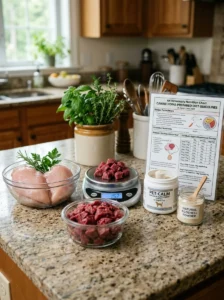
Of all the nutritional balance concerns in homemade diets, the calcium-to-phosphorus ratio deserves particular attention, since it’s both critically important and genuinely easy to get wrong without realizing it. Muscle meat, the primary protein source in most homemade recipes, is naturally high in phosphorus but low in calcium, meaning a diet built primarily around muscle meat without a deliberate calcium source can develop a significant imbalance over weeks or months. This isn’t something that causes obvious symptoms immediately, which is part of why it’s such an easy gap to miss — the consequences, primarily affecting bone health, tend to develop gradually rather than announcing themselves clearly. This is precisely the kind of nutritional detail that a veterinary nutritionist accounts for systematically, but that’s genuinely difficult for an owner to calculate accurately on their own without specific training in this area.
Treats and Toppers vs. Full Meal Replacement: A Practical Distinction
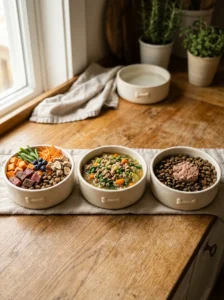
I think the clearest way to think about the recipes in this guide is as a spectrum, not a binary choice. On one end, an occasional spoonful of pumpkin mash as a treat carries essentially no nutritional balance risk, since it’s a tiny fraction of overall intake. In the middle, using a homemade recipe as a regular “topper” on top of a complete commercial food still leaves the commercial food doing the heavy lifting nutritionally, with the homemade addition mostly affecting palatability and variety. At the far end, replacing commercial food entirely with homemade meals shifts the entire nutritional responsibility onto that homemade formulation, which is exactly the scenario requiring genuine professional planning. Understanding where on this spectrum your own approach falls helps calibrate how much nutritional rigor is actually necessary for what you’re doing.
A Realistic Look at the Time Commitment
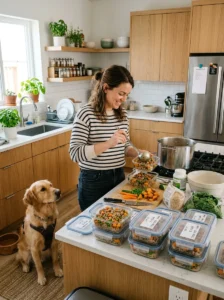
I want to be honest about something that often gets glossed over in homemade dog food content: even simple recipes take real, recurring time. Between sourcing ingredients, cooking, cooling, portioning, and cleanup, our occasional homemade meals for Bruno and Mishi take a genuine chunk of a weekend afternoon when we batch-prepare a few days’ worth at once. This isn’t meant to discourage anyone from trying it — it’s been worth it for us — but it’s worth factoring into your own realistic assessment of whether homemade food, especially as a primary diet, fits sustainably into your actual schedule and lifestyle, rather than being something that sounds appealing in theory but becomes a source of stress or inconsistency in practice.
Ingredient Sourcing and Cost Considerations
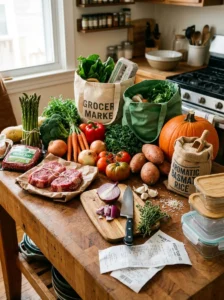
Beyond the nutritional planning, homemade dog food often involves different sourcing considerations than simply buying a bag of commercial food. Quality protein sources, particularly if you’re trying to incorporate variety or specific cuts, can add up in cost more than owners initially expect, especially for larger dogs or multi-dog households. Some owners find buying in bulk, or sourcing from the same suppliers they use for their own household meals, helps manage this cost more sustainably than purchasing smaller quantities specifically and separately for the dog’s recipes.
Quick Reference
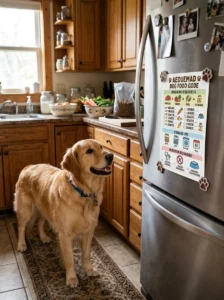
On the question of Is homemade dog food generally healthier than commercial food?: Not automatically — quality commercial dog food formulated to meet established nutritional standards can be just as healthy as homemade food, and arguably more reliably balanced unless homemade meals are carefully planned with professional guidance. On the question of Can I just feed my dog whatever I’m eating, adjusted slightly?: This isn’t recommended as a primary diet approach, since human meals aren’t formulated for canine nutritional needs and often contain ingredients (seasoning, high sodium, ingredients from our unsafe list) that aren’t appropriate for regular dog consumption. On the question of How do I know if my dog’s homemade diet is actually balanced?: Working with a veterinary nutritionist to formulate or review the diet is the most reliable way to know for certain, rather than assuming a recipe found online meets your specific dog’s complete nutritional needs. On the question of Can homemade food help with my dog’s allergies?: Sometimes, particularly with vet guidance to identify and avoid a specific allergen through a controlled homemade diet, but this should be done as part of a structured elimination diet process with your vet, not casual experimentation without professional oversight guiding the specific ingredients and protocol used.
Learning the real difference between “occasional homemade treats” and “a fully balanced homemade diet” changed how I approach cooking for Bruno and Mishi. The simple recipes here have become a genuinely useful part of our routine, especially during digestive upset, while the bigger commitment of a full homemade diet remains something I’d only pursue with real professional guidance behind it.
For more on feeding fundamentals, our guides on how much to feed your dog and reading a dog food label are excellent next reads.